
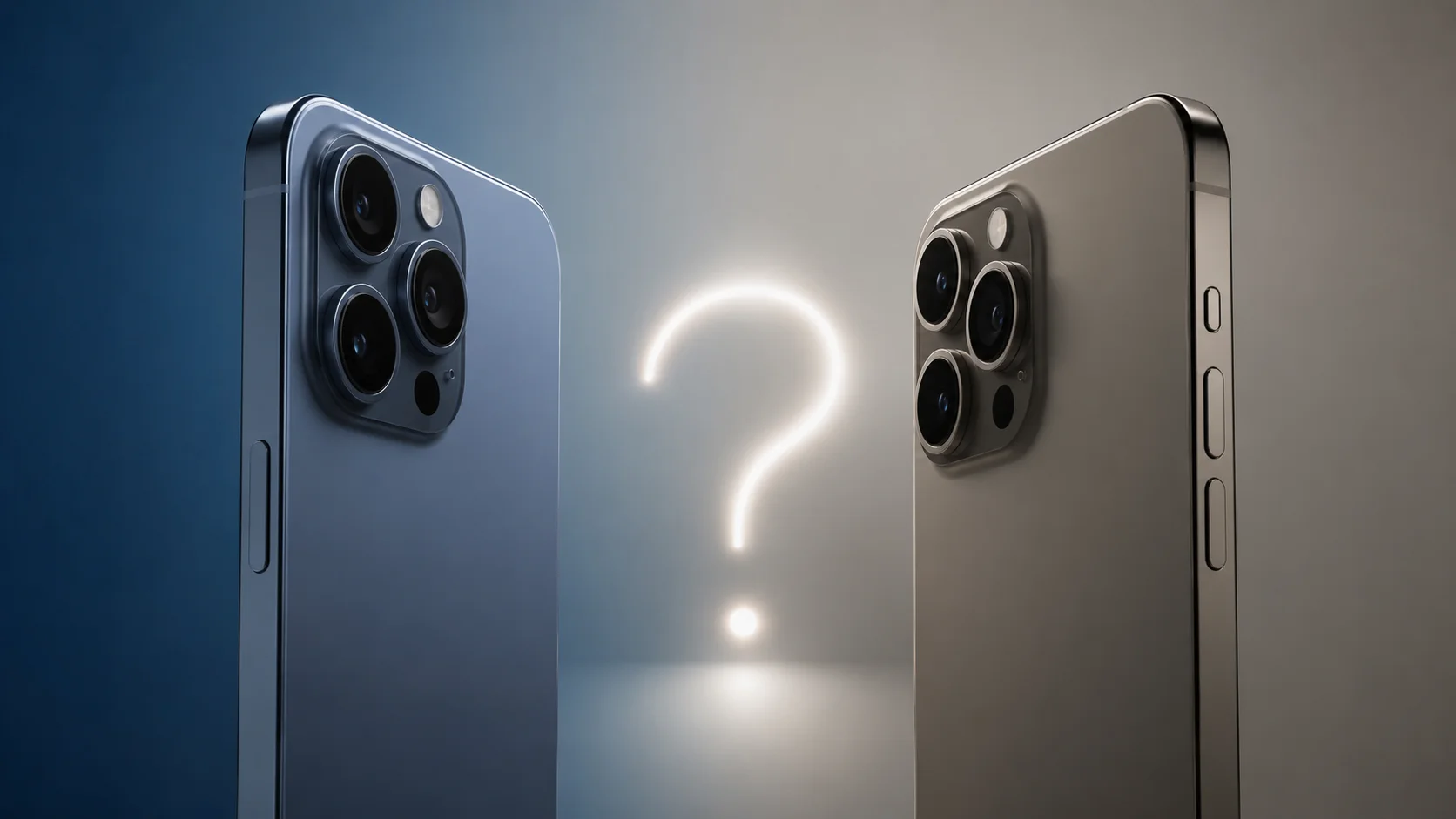
Which Is Better, iPhone or Android? The 60 Second Answer
Of every question that lands in my inbox, this one shows up the most, so I will hand you the honest verdict right here instead of burying it deep in the page.
Neither side wins for everybody. But the answer is not a shrug either.
Which is better, iPhone or Android, really hinges on three things and little more.
- The devices you already own. Carry a Mac and wear an Apple Watch, and the iPhone slips into your life like it was measured for it. Live inside Gmail, Google Maps, and a Windows PC, and Android will feel like home.
- Your real budget. A decent new Android phone starts near $200. The cheapest new iPhone sits around $600.
- How long you keep phones. Five years changes the math completely. Two years barely moves it at all.
That is genuinely most of the answer.
Search iphone vs android which is better and the same names keep topping the results: PCMag, Asurion, Android Police. Every one of them lands in the same place, and that surprised me the first time I noticed it. No universal winner exists in 2026. The platforms have moved so close together that your life picks the winner now, not the spec sheet.
One thing is clearly shifting though. Apple just posted its strongest start to a year on record for phone sales, so plenty of people are voting with their wallets right now.
And here is the part almost nobody leads with. In one study of people who switched platforms, about seven in ten who moved from Android to iPhone said they were happy with the move. Only about a third going the other way said the same. That gap outweighs any benchmark, and I will show you exactly why once we reach the switching section.
Until then, sit with one thought. The right question was never which phone is better. The right question is which phone is better for the way you live.
iPhone vs Android at a Glance: 9 Differences That Actually Matter
| Category | iPhone | Android | Best For |
|---|---|---|---|
| Price | Starts around $600 | From around $200 to $2,000+ | Android for budget |
| Software updates | Usually 5–7 years | Varies by manufacturer | iPhone for predictable longevity |
| Customization | More limited | Extensive customization | Android |
| Ecosystem | Apple devices work closely together | Works especially well with Google services and Windows | Depends on your other devices |
| AI assistant | Apple Intelligence | Google Gemini | Depends on privacy vs capability preference |
| Camera | Strong photos and especially video | Excellent variety across brands | Depends on what you shoot |
| Security | Closed ecosystem and strict app controls | Strong security with more installation freedom | Depends on use case |
| Resale value | Generally stronger | Often drops faster | iPhone |
| Hardware choice | Limited to Apple’s lineup | Many brands, sizes and designs | Android |
Most people kick off a phone comparison by lining up specs, and honestly, that is the first wrong turn I watch them take. Specs expire every year. The one thing that truly separates an iPhone from an Android phone never does.
People ask what’s the difference between Android and iPhone as if the answer needs fifty rows of specs. It needs one sentence. Apple builds the iPhone and the iOS operating system as a single closed product, while Android is Google’s operating system running on phones from Samsung, Google, Motorola, OnePlus, and plenty of other companies. One walled garden. One big open market.
Almost every one of the key differences below grows out of that single split. This is the side by side comparison I wish somebody had slid in front of me before my first upgrade.
| What is different | iPhone | Android | Why it matters |
|---|---|---|---|
| Who makes the phone | Only Apple | Samsung, Google Pixel, Motorola, OnePlus, and more | More makers mean more shapes, sizes, and prices to choose from |
| Price range | Starts around $600 | From about $200 to well over $2,000 | Android has a phone for almost every budget |
| Software updates | Usually five to seven years | Often two to three years, and it varies by brand | Support years quietly decide how long your phone stays safe and useful |
| Resale value | Holds value well | Loses value faster, often about twice as fast in the first year | The cheaper phone upfront can cost more when you sell it |
| Customization | Polished but limited | Themes, widgets, launchers, default apps | If you like your phone your own way, Android wins this row easily |
| Ecosystem | Mac, iPad, Apple Watch, and AirPods all work tightly together | Fits best with Windows PCs and Google services | Your other devices may already be voting in this decision |
| AI features | Apple Intelligence, built around privacy, on the newest iPhones | Google Gemini on most modern Android phones | You are picking between privacy focus and raw capability |
| Camera | Reliable quality and especially strong video | Huge variety, and top models now match or beat the iPhone | The camera gap is much smaller than it used to be |
| Security | Closed system with strict app review | Strong AI scam protection on a more open system | Both platforms keep most people safe, just in different ways |
Read that table once more, slowly. Nine rows, and every row walks back to the same root.
One company steering everything versus many companies sharing the stage. That is the whole debate.
And that is exactly why this argument refuses to die. Comparing iOS vs Android phones was never a spec fight. The iPhone versus Android argument is a personality test.
If a friend asked me which is better, iPhone or Android, in one honest line, I would say this: Android hands you endless choices, the iPhone quietly makes most of them for you, and the better pick depends entirely on how much you enjoy making decisions. the iPhone quietly makes most choices for you, and the better option depends entirely on how much you enjoy making decisions.
What Your Phone Really Costs the Price Myth That Trips Up Most Buyers
| Factor | iPhone | Android |
|---|---|---|
| Typical starting price | Around $600 | Around $200 |
| Budget choices | Limited | Very broad |
| Premium choices | Yes | Yes |
| Resale value | Generally stronger | Usually falls faster |
| Long-term updates | Typically longer | Depends heavily on brand |
| Best for short ownership | Depends on model | Often Android |
| Best for long ownership | Often iPhone | Premium Android can compete |
Flip to the price first. Nearly everyone does, and honestly, fair enough.
But that number on the tag is not what the phone actually costs you. This single misunderstanding has caused more buyer regret than any camera, chip, or screen I can name.
Here is the math I run now. What a phone really costs is what you pay, minus what you get back at resale, divided by the years the phone keeps receiving updates. Once I started doing that arithmetic, the whole price comparison between iPhone and Android flipped on its head.
What You’ll Pay Up Front
A new iPhone starts around $600. A solid Android phone starts around $200, and that part is completely true. Android fans have earned the bragging rights there.
If your budget stops at $300 today, I would tell you straight: buy the Android. No debate.
But the claim that Android is always cheaper dies at the top of the market. Samsung’s folding phones now cost more than Apple’s most expensive iPhone. And one number genuinely made me sit up. Apple’s average iPhone selling price recently passed $1,000, more than Samsung, Xiaomi, Oppo, and Vivo’s averages combined. One brand, outpricing four rivals put together.
Hardware variety still cuts both ways. Android covers every wallet from roughly $150 to well past $2,000.
What It’s Worth When You Sell
Most buyers never check this figure at all.
Resale value is simply what someone else will hand you for your old phone. During year one, an iPhone typically sheds a small slice of its price, while many Android phones shed roughly twice as much across the same stretch.
Open any used phone marketplace and the pattern jumps off the screen. A three year old iPhone still draws a queue of real buyers. A three year old budget Android is lucky to get a single offer.
The 4 Year Math Nobody Shows You
Line up a $599 iPhone against a $300 Android over four years. The Android banks you $300 on day one. No argument from me.
Now complete the picture. The iPhone keeps receiving updates for the full four years while the cheaper phone likely goes quiet around year two or three. And come selling time, the iPhone still returns a few hundred dollars while the other phone returns pocket change.
Stack those pieces together and the $300 gap shrinks fast. Sometimes it disappears entirely. Not every time, but often enough that “Android is cheaper” stops being an answer and turns into a starting point.
So where does real value for money hide? Upgrade every year or two and the Android is yours, enjoy the savings. Keep phones four or five years and the iPhone’s quiet math comes out ahead more often than people expect.
The price tag is the smallest number in this whole decision. It just happens to be the only one printed in big font.
Software Updates: the Spec Sheet Number Nobody Checks
Run a tiny experiment. Ask someone who just bought a phone how many years of software updates it will receive. Most people cannot answer you.
I have sat with friends comparing cameras, screens, and charging speeds for weeks, then watched them walk straight past the one number that decides how long a phone actually feels new.
The gap is wider than most buyers guess. iPhones usually receive iOS updates for five to seven years after release. Most Android phones get about two to three, and the precise figure swings hard depending on which brand built the phone.
That second half is where people trip. Android is not one phone, so support promises differ wildly between Samsung, Google, Motorola, and everyone else. A premium model from one maker might enjoy years of care while another brand drops its budget phones almost at once. Never assume every Android ages alike, because they do not.
Why do updates carry this much weight? Two reasons. Security patches protect your banking apps and passwords, and new releases like iOS 26 and Android 16 deliver the features that keep an older phone from feeling ancient. When the updates stop, the phone keeps running. But the clock starts ticking loudly.
And updates close out the money math from the price section. A $599 phone supported for six years runs you about $100 per year of useful life. A $300 phone whose updates stop after two and a half years runs closer to $120 per year, and that figure climbs higher once the resale value drops to zero.
The cheaper phone ends up costing more per year. Most buyers never run that number once.
Camera, Battery and Speed in 2026: Closer Than You’ve Been Told
| Category | iPhone | Android | Current Verdict |
|---|---|---|---|
| Photos | Excellent | Excellent on top models | Very close |
| Video | Excellent | Strong on flagship models | iPhone |
| Battery life | Excellent on some models | Excellent on some flagships | Model dependent |
| Performance | Very strong benchmarks | Very strong flagship performance | iPhone on benchmarks, little everyday difference |
| Expandable storage | No microSD | Available on some models | Android |
A decade ago I could have written this section in my sleep. The iPhone owned the better camera and the quicker chip, and Android phones went hunting for a charger by dinner time.
Not one of those sentences survives 2026. Flagship iPhones and the best Android phones now sit closer than any comment section wants to admit. The gaps left are real but small, and they live in very specific corners.
Camera
Camera quality is where buyers fixate hardest, and where the oldest myth still breathes.
Photos first. Top Android phones like the Samsung Galaxy S25 Ultra and the Google Pixel now trade blows with the iPhone shot for shot, so crowning a winner here is honestly splitting hairs. And please ignore the megapixel count entirely. Judging a camera by megapixels is the most common mistake phone buyers make, because the sensor and the software behind the lens decide far more than any number printed on the box.
Video tells a different story. The iPhone still records the best video of any phone, and most camera testers agree on that point. So ask yourself one thing. Do you shoot more photos or more video? That answer picks your winner.
Battery and Performance
The old joke claimed Android owners always knew where the nearest outlet was.
Then the latest iPhone Pro Max went and topped independent battery tests, beating most Android flagships in the process. That plot twist sums up where battery life stands today. Among flagships it is a tie settled by model, never by logo.
Performance rhymes with that pattern. Apple’s chips still post the strongest benchmark numbers, yet in daily use the speed gap between an iPhone and a leading Android phone is nearly impossible to feel. Maps, camera, games, calls. Instant on both.
One corner does remain one sided. Select Android phones still take microSD cards for expandable storage, something no iPhone has ever offered.
The Honest Scorecard
- Photos: Dead tie at the top. Pixel, Galaxy, and iPhone all deliver.
- Video: iPhone. The edge that refused to close.
- Battery life: Tie among flagships, with the iPhone Pro Max as the surprise test topper.
- Speed: iPhone on the spreadsheet. Invisible in the hand.
- Storage flexibility: Android, courtesy of microSD on select models.
Scan that list again and spot what is missing. Not one category where either side walks away with everything. Those days ended a while ago.
Is iPhone Really Safer Than Android? The Answer Got Complicated
| Security Area | iPhone | Android | Edge |
|---|---|---|---|
| Malware protection | Strong | Strong | iPhone |
| Third-party app freedom | More restricted | More flexible | Android |
| Scam protection | Strong | Strong AI-powered protections | Android in your cited comparison |
| Privacy approach | Apple emphasizes on-device/private processing | Google uses cloud services more extensively for some features | iPhone |
| User control | More restricted | More control | Android |
Here is a fact that stops people mid sentence. In one recent study, iPhone owners were actually more likely to get hammered by scam texts every single week than Android owners.
The “safe” phone getting spammed more. Strange, right? And it points at the honest answer: both the iPhone and Android are secure enough for most people, but which one is safer depends on the threat you worry about. Split security and privacy into three buckets and the picture snaps into focus.
Malware and shady apps: edge iPhone. Apple’s closed system and strict App Store review make it genuinely hard for a bad app to land on your phone. Android will let users install apps from outside the Google Play Store, and Android’s real risk hides inside that freedom. Here is the part you control though. The single biggest security mistake Android users make is installing apps from unknown websites. Drop that one habit, stay inside the Play Store, and most of this gap vanishes.
Scams and fraud: edge Android. Google’s AI powered scam detection has grown seriously good, and in 2025 surveys Android users were noticeably more likely to rate their phone’s anti fraud tools as effective. The scam text flood pounding iPhone owners is the ugly flip side of that result.
Privacy: edge iPhone. Apple’s business model does not run on collecting your data, while Google’s advertising model does. No conspiracy hiding here. Just two companies earning money in very different ways.
So what survives the lazy claim that iPhone is simply safer? Nothing.
Against malware, iPhone leads. Against scams, Android leads. For privacy, iPhone leads again. Two rounds to one on paper. But the round you lose might be the only round you actually care about.
Ecosystem and AI in 2026 : Where iPhone and Android Truly Split
| Feature | iPhone | Android |
|---|---|---|
| Laptop integration | Best with Mac | Strong with Windows and Google services |
| Smartwatch integration | Apple Watch | Wear OS and other Android-compatible watches |
| Earbuds | AirPods | Wide range of options |
| Photo/cloud ecosystem | iCloud + Apple Photos | Google Photos + Google services |
| AI assistant | Apple Intelligence | Google Gemini |
| Main strength | Integration and privacy focus | Capability and broader availability |
| Main trade-off | More closed ecosystem | Less tightly integrated across brands |
Ask a content iPhone owner why they stay, and they almost never bring up the chip or the camera. They say something hazier. “Everything just works together.”
That hazy answer settles more phone purchases than any spec ever will. Choosing Apple or Android stopped being a phone decision a long time ago. The app ecosystem and the new AI race are where iPhone and Android genuinely split in 2026.
Why Do People Say the iPhone Ecosystem Beats Android?
An ecosystem simply means your phone, watch, laptop, and earbuds behaving like one device instead of four.
Apple is the best in the business at this trick. Start an email on your iPhone and finish it on your Mac. Answer a call on your laptop. Toss a photo to AirDrop and it lands on a friend’s phone in seconds. The glue stays invisible until the day you lose it, which is exactly why people fear leaving the iPhone.
Android plays another game entirely. Gmail, Google Maps, and Google Photos run beautifully on any device, including Windows PCs and even iPhones. Less glue. More breathing room. And both the App Store and Google Play Store stock every major app these days, so the fight is no longer about app availability. It is about which style of invisible helper fits your life.
The one real pinch is family location sharing, since Apple’s Find My never leaves the Apple world. The fix takes about two minutes, and my guide on how to share your location between iPhone and Android shows it step by step.
Apple Intelligence vs Gemini: Privacy vs Power
Here is something most buyers never get told. The two AI features riding in your next phone are engineered in opposite ways.
Apple Intelligence handles most requests right on your iPhone, so your data stays with you. Google Gemini leans on powerful cloud servers, which frees Gemini to pull off bigger generative tricks and run on far more phones.
Today’s honest scorecard reads like this. Gemini is the more capable assistant right now, full stop. Apple Intelligence is the more private design. Your choice here is not better or worse. It is which trade you are willing to live with.
Goodbye, Green Bubble: What RCS Actually Changed
For years, texting between iPhone and Android meant crushed photos, broken group chats, and no read receipts. The green bubble war was real, and I watched it end friendships over nonsense.
Apple adopting RCS messaging quietly finished it. Texts between the platforms now carry full size photos, typing indicators, and group chats that actually behave. The everyday messaging experience finally matches on both sides. Anyone still warning you about green bubbles is repeating history, not news.
Calls made the jump too. An iPhone can FaceTime an Android phone through a simple link these days, and my guide to video calls across platforms covers the even easier options.
The bubbles never mattered anyway. The plumbing did. And the plumbing finally works.
iPhone vs Android Pros and Cons
| iPhone | Android |
|---|---|
| Longer software support | More price options |
| Strong video recording | More customization |
| Strong resale value | More hardware variety |
| Excellent ecosystem integration | Folding phones and other form factors |
| Easier consistent experience | More control over defaults and software |
| Higher starting price | Software support varies by manufacturer |
| More ecosystem lock-in | Resale value often drops faster |
Pose this question to an iPhone fan and an Android fan and you will walk away with two commercials, not two answers. The whole Android phones vs iPhones debate runs on loyalty more than facts. The honest version is shorter than either camp admits. iPhone takes longevity, video, and resale value. Android takes price, choice, and freedom. Even Reddit’s Android crowd concedes Apple’s real edge has narrowed to the camera and the processor.
You have seen the listicles. 10 reasons why iPhone is better than Android. 10 reasons why Android is better than iPhone. And below them, the comment wars: are Androids better than iPhones, are iPhones better than Androids, on repeat forever. Most are padded. But these two lists keep the parts that fans leave out.
What iPhones Still Do Better
- Updates that last five to seven years. An iPhone stays current long after most Android phones have stopped receiving anything at all.
- The best video recording on any phone. Android has closed the photo gap. The video gap survived.
- Strong resale value. An iPhone often holds its worth roughly twice as well as a typical Android phone through year one.
- Devices that act like one device. Watch, laptop, and earbuds passing tasks between them without any setup.
The Disadvantages of iPhone Nobody Leads With
- The entry price. The cheapest new iPhone starts at $599. A solid Samsung Galaxy phone starts around $200.
- Leaving costs you. Your paid apps, your Apple Watch, and your whole setup quietly lobby against ever switching.
- Scam texts. Oddly enough, 2025 security surveys found iPhone owners report more scam texts than Android owners do.
The Real Benefits of Android Over iPhone
- Choice at every budget. Perfectly good phones exist at $200. Folding phones cross $2,000. Apple sells one lane.
- Real customization options. Widgets, launchers, and default apps arranged around your life instead of the reverse.
- Hardware Apple refuses to sell. Folding screens, stylus support, and microSD slots on select models.
Where Android Genuinely Falls Short
- The update lottery. Two to three years of support is typical, and it hinges entirely on which brand you bought.
- Value that evaporates. Most Android phones bleed resale worth roughly twice as fast as an iPhone in the first year.
- Brand roulette. Assuming every Android matches a Samsung flagship is the most common mistake buyers make.
Notice what did not make either list. Green bubbles, because RCS fixed that. Megapixels, because both sides take excellent photos now. The stale arguments died quietly.
The biggest con sits outside both lists. It is buying the logo instead of the phone. Pick the badge and you inherit every flaw above. Pick the actual phone, for your budget and your habits, and the list shrinks to the few cons you can genuinely live with.
Which Phone Is Better for You? iPhone or Android by Buyer Type
| Your Situation | Better Choice | Why |
|---|---|---|
| You own a Mac or Apple Watch | iPhone | Strong ecosystem integration |
| Budget is around $300 | Android | More choices at the price |
| You keep phones 4–6 years | iPhone | Longer update support |
| You shoot lots of video | iPhone | Strong video performance |
| You want maximum customization | Android | More control |
| You want folding phones or unique hardware | Android | Wider hardware variety |
| You use Windows + Google services | Android | Natural fit |
| You want a simple consistent experience | iPhone | More controlled hardware/software |
The reviewers I trust gave up crowning a single winner years back. They hand you a rubric instead, because which phone is better, iPhone or Android, genuinely shifts from one person to the next. So let me hand you an hour back. Find yourself below and take the verdict.
Pick iPhone If…
- You already own a Mac or an Apple Watch. An iPhone completes that setup, and Apple devices start behaving like one device within minutes.
- You keep phones for four, five, six years. An iPhone receiving five to seven years of updates is the safest long term buy in phones.
- You film more than you photograph. Photos are a tie now. Video is not, and the iPhone still takes it.
- You game heavily. Even Reddit’s Android regulars concede Apple’s processor lead.
- You want ease of use over options. Ease of use is Apple’s real product. Choice is Google’s.
Pick Android If…
- Your budget is tight, or you shop midrange. Proper Android phones start around $200, and a midrange Android typically packs more hardware for the money than any iPhone near the same price.
- You like control. Launchers, default apps, widgets arranged your way. Android treats the phone as yours to shape.
One warning before you decide. Never judge Android by the one cheap, slow Android you tried years back. Quality swings hard between brands, so judge the exact model, never the platform.
Still Torn? The 3 Question Tiebreaker
When a friend asks me which phone to buy, I never answer with a brand. I ask three questions back.
Still asking which one should you buy? Answer these three honestly. No spec sheet required.
- What do your other devices run? Apple gear gently tugs you toward the iPhone. A Windows laptop and no smartwatch leave both doors open.
- How long do you keep a phone? Past four years, the iPhone’s update advantage converts into real money. Swap every two or three years and that advantage mostly fades.
- What is your real budget after resale? Around $300 all in, the Android wins and it is not close. At $600 and up, factor in what an iPhone sells back for before you compare stickers.
Three honest answers beat three hours of spec sheets. And if your answers point at the platform sitting in someone else’s pocket, the next section covers the jump: what actually follows you across, and what gets left behind.
Switching From Apple to Android (or Back): What Nobody Warns You About
| What You’re Moving | What Happens When Switching |
|---|---|
| Contacts | Can usually be transferred |
| Photos | Can be transferred |
| Messages | Transfer tools are available |
| Paid apps | May need to be purchased again |
| Apple Watch | Does not transfer to Android |
| Wear OS watch | Better suited to Android |
| Subscriptions | May need to be canceled/restarted depending on billing |
| iMessage | Needs attention when leaving iPhone |
| RCS | Makes cross-platform messaging easier |
Everybody warns you that switching phones is a nightmare. That warning is about a decade out of date. Switching from Apple to Android, or the other direction, runs mostly smooth in 2026, and the regrets I see almost never trace back to the phone itself. They come from everything plugged into the phone.
Run this audit before you buy anything
Skipping the ecosystem audit is the single most expensive switching mistake. Ten minutes, five checks, and your move stays clean.
- Paid apps. List every app you ever bought. Some get bought again on the other store.
- Watch and earbuds. An Apple Watch pairs with nothing but an iPhone. Earbuds usually survive the move, minus their favorite tricks.
- Your photo library. Know where your photos actually live and how much space they eat. Storage options matter here, since no iPhone takes a microSD card and some Android phones do.
- Subscriptions. Anything billed through Apple or Google has to be canceled and restarted on the new side.
- Group chats. Far less scary since RCS, but check nothing important exists only inside iMessage.
What actually moves cleanly now
Google’s Transfer to Android app and Apple’s Move to iOS app now carry contacts, photos, and message history between platforms in one sitting, over WiFi or a cable. Need the full walkthrough? I keep separate guides on how to transfer your photos and how to move your messages and contacts, both written for normal humans. The horror stories about losing ten years of texts come from before these tools existed. And RCS means your leaving no longer wrecks the family group chat, whichever direction you go.
What still stings
Two things. Money first: apps you paid for on the App Store do not follow you to Google Play, and the reverse is just as true. Then hardware: an Apple Watch without an iPhone becomes a very nice bracelet, and a Wear OS watch without an Android phone is equally stranded.
The regret numbers I promised you
Back at the top of this article I teased the strangest stat in phone switching. Here it is. In one small study, about seven in ten people who moved from Android to iPhone said they were satisfied with the switch. People who went the other way? Only about a third said the same. Treat the exact figures as a signal rather than a law, since the sample was modest. Still, the flow agrees: roughly one in eight new iPhone buyers in early 2026 arrived from an Android phone.
Why so lopsided? Not phone quality. Gravity. Leaving Android costs you options, and options are easy to recreate. Leaving an iPhone usually costs you a watch, a pair of earbuds, and years of iCloud photos, and none of those fights happen on a spec sheet.
Run the audit and switching is a single evening. Skip it, and you keep tripping over pieces of your old setup for months.
iPhone vs Android: Your Questions Answered
Eight questions land in my inbox more than any others. Short answers here, with the deeper reasoning linked inside each one.
Which is better, iPhone or Android?
Neither wins for everyone. The iPhone suits people who keep phones for years, own other Apple devices, or shoot lots of video. Android suits tight budgets, hardware choice, and customization. My advice stays the same: match the phone to the person, and the buyer section above does exactly that in three questions.
What can iPhones do that Androids can’t?
More than most lists admit. An iPhone still gives you five to seven years of software updates, the best video recording on any phone, stronger resale value, and the FaceTime and iMessage polish Android has not matched. Beyond that list, the honest answer is taste, not capability.
What are the disadvantages of iPhone over Android?
Price starts the list: the cheapest new iPhone costs $599, and Apple sells no budget model. Then comes getting locked into Apple’s ecosystem, fewer hardware choices, no microSD slot on any model, and a heavier scam text load in recent surveys. Reddit’s phone communities add the fair counterpoint: for the average user, daily use feels nearly identical on both.
Is iPhone really more secure than Android?
Mostly, but not across the board. iPhone holds the edge on malware and privacy, since Apple profits from hardware rather than ads. Android pulled ahead on scam protection in 2025 studies. Your own habits decide most of your safety on either platform. The security section above explains the split.
How long do iPhones last compared to Android?
Expect five to seven years of updates on an iPhone. Most Android phones get two to three, and the exact number depends on the brand you pick. That gap is why iPhones also keep their resale worth longer. The updates section above shows how this flips the real yearly cost of owning a phone.
Is it worth switching from iPhone to Android?
Honest answer: only if you run the ecosystem audit first. In one small study, about a third of people who switched from iPhone to Android felt satisfied, versus roughly seven in ten going the other way. Most of that gap is the Apple gear you leave behind, not the phone. The switching section above walks through the audit.
Why do so many people switch from Android to iPhone?
The pull is practical: longer updates, stronger resale, better video, and family members already inside Apple’s ecosystem. Roughly one in eight new iPhone buyers in early 2026 arrived from an Android phone. People rarely switch for one single feature. They switch because the whole package got easier.
Which is better on a tight budget, iPhone or Android?
Android, plainly. Decent models start around $200, and a midrange Android packs more hardware for the money than anything Apple sells near the price. But one exception matters: stretch to $599, keep the iPhone for years, and long updates plus resale value narrow the real cost fast. The price section above runs the numbers.
So… Which One Should You Actually Buy?
Ask me which is better, iPhone or Android, and my answer never changes: the iPhone wins if you keep phones for years and already own Apple gear; Android wins on budget and choice. The three tiebreaker questions above settle it for your exact life in about a minute. And if you do switch sides, my step by step guides on moving photos, messages, and contacts, plus making video calls between iPhone and Android, will carry you through the move.